


Cinepoems, ‘Jinke Dil Bahut Bade The’ – Permeate the Advertising Ecosystem
- Namya Suri
- Nov 1, 2021
- 3 min read
Updated: Mar 10, 2022

"When you use poems as a background instead of music, and you let your hand, or scissors in the case of editing, wander together with the poem, that could give you a new form of film."
- Hans Richter (experimental filmmaker, artist)
Film poems have permeated the advertising ecosystem. Labels like IXIGO, Paper Boat and, Parle G have used Cinepoem ad films for the 'right connect' with their audience. A recent survey conducted by Wyzowl noted that 86% of businesses use videos as a marketing tool. And 93% of marketers who use videos say that it is a significant part of their marketing strategy. While some have only the subtlest product tie-ins, many designedly meld art with commerce—resulting in increased sales and brand recognition. Adweek called it a "burgeoning creative trend ... to make a campaign stand out and give people a more personal connection to a brand."
But, Why?
Praful* (the name was changed on request), a senior marketing manager at a top e-commerce firm, opined, “I think poetry really draws out sentiments ... so to channel and achieve sentimentality labels lean towards poetry. And once you realise something works, everyone is bound to try and repeat it.”
However, it is not limited to goo-ey emotionalism. The film poem also "expands upon the specific denotations of words and the limited iconic references of images," wrote William Wees (in his essay, Words and Moving Images). In turn, constructing a much more comprehensive range of connotations, associations and metaphors. At the same time, it puts limits on the potentially limitless possibilities of meaning in words and visuals and directs audience responses toward some "concretely communicable experience."
Clare Pollard (Editor of Modern Poetry in Translation), told Rishi Dastidar (copywriter and poet) in a BBC Radio Four documentary podcast, “poetry was originally oral, and that means all the techniques we associate with poetry – repetition, alliteration, rhythm, rhyme – they're all basically mnemonic devices.” They are memory devices. And that’s precisely what advertisers want adverts to be – memorable speech – so they will stick in your head when you’re in the aisles of the supermarket."
Abhay Vats, a filmmaker (ad films, movies for digital media platforms), revealed – with the advent of digital media making visual media content today has become increasingly easy. "You can take a phone and shoot and edit. You do not need high-end equipment to do all that." Moreover, digital media allows for more creative liberty than television––which is far more rigid, letting room for more artful content, he added.
But, How?
Train Mein Hai Ghar Wali Baat, a Cinepoem by IXIGO, received an overwhelming response and soon went viral with over 20 million views across Facebook, YouTube and Twitter.
The passengers on-screen were seen gliding and sliding over the train booth. Piling and piling briefcases over suitcases for makeshift tabletops – all in preparedness for the game of card as they swig-slurped cups of tea whilst chattering and proffering advice for free.

Illustration by Tanya Raman
Narrated by actor, director Sanjay Mishra in raspy, guttural tones – both beat-ed and rhythmically paced, the film transported me back to the fanciful train rides bound for Nani-ka-Ghar.
Double click the frame to watch the film
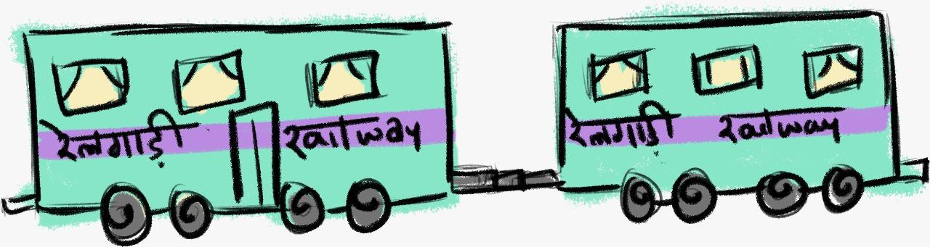
Illustration by Tanya Raman

Likewise, Paper Boat with Black Box Films, in their film poem, My First Train Journey, produced over the title track for Malgudi Days with a protagonist resembling a modern-day Swami, rekindled memories from my first train ride. This ode to Indian Railways "for the wonderful memories" left me aah-ing and aww-ing and sniff-sniffling (sometimes, shhh!).
Illustration by Tanya Raman
Double click the frame to watch the film
The concepts of the film poem have been used by creatives for a long, long time, each applying their understanding of what the film-poem should be. Some use the term ‘film poem’, others prefer ‘cinepoem’, whereas some seem to place importance in the existence of the hyphen between the words film and poem and hence talk about the ‘film-poem’.
However, widely heeded as avant-garde and experimental by practitioners, theoreticians and viewers, alike––and commonly reserved for the realm of abstract cinema. It was a refreshing delight to find Cinematic poem short films finding a sweet spot in ad films––made accessible to all.
Several have expressed, it was the growth in the number of Internet users (in India) that precursed Cinepoem ad films gaining prominence in the marketing mix – while others point to the delectable appeal of the genre itself. Whatever be the cause, these Cinepoems, like trains, were cramped for space, "par inke dil bahut bade the!"


Comments